Written by: Joseph Pelerin, DDS

For more than 2 decades, Hemaseal & Cide (Advantage Dental Products) has earned a reputation for eliminating postoperative sensitivity and boosting bond strength—thanks to its chlorhexidine-based formula that enhances wetting, antimicrobial action, and collagen support in the bond zone.
Here we outline the key mechanisms behind Hemaseal & Cide’s clinical success and why it remains a preferred product for any bonding or cementation procedure.
Infusion of the Bond Zone: The Power of Chlorhexidine
What sets Hemaseal & Cide apart is its 4% chlorhexidine content. Chlorhexidine is a linear molecule with a dual-pole positive charge. One pole is drawn into the negatively charged tooth structure, while the other targets the negatively charged bacterial cell wall. This attraction helps infuse the entire bond surface while pulling HEMA and water with it (Figure 1).
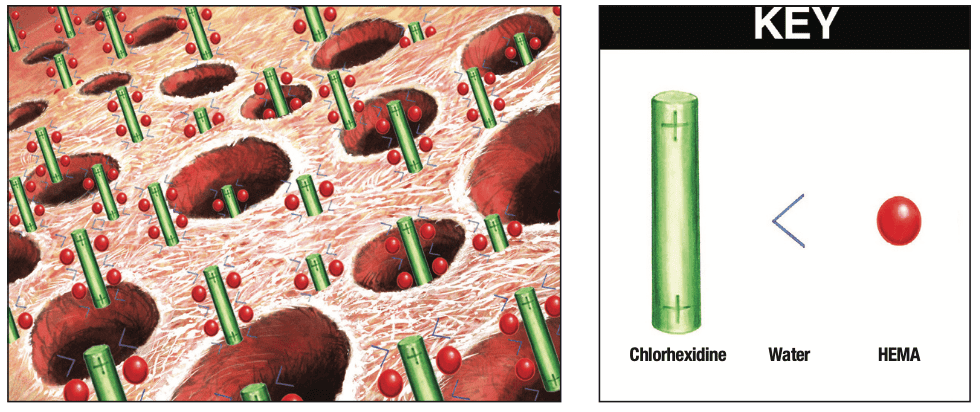
By fully wetting and expanding the collagen network—which is more important to bond strength than the dentinal tubules—Hemaseal & Cide creates the ideal foundation for bonding or cementation. This collagen framework helps ensure predictable adhesion and long-term success.
Zero Sensitivity
Pressure sensitivity often results from voids in the hybrid layer or inadequate disinfection. Hemaseal & Cide eliminates both concerns. It penetrates the dentinal tubules and collagen matrix thoroughly, creating a complete seal (Figure 2). Post-op senstivity often signals disinfection and incomplete wetting.
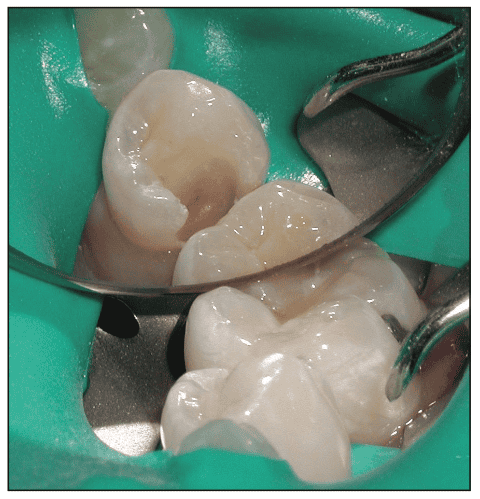
In a 2020 clinical evaluation, 15 dentists placed over 150 restorations with Hemaseal & Cide—zero reported sensitivity.
Enhancing Bond Strength— Especially With Self-Etch
Independent studies from Clinicians Report and DENTAL ADVISOR confirm what clinicians have seen chairside: Hemaseal & Cide improves both short- and long-term dentin bond strength (Figure 3). In fact, it was the only product in a comparative test that enhanced self-etch adhesives.
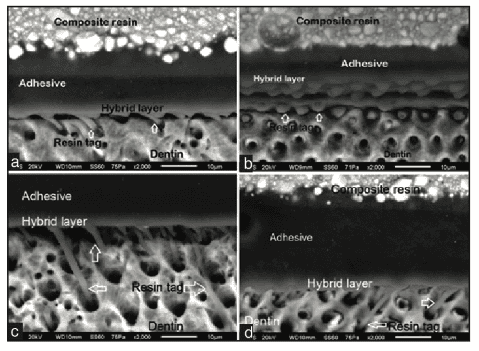
More importantly, published studies have shown that chlorhexidine prevents matrix metalloproteinase activity—the enzyme-based degradation responsible for bond failure over time. By halting this breakdown process, Hemaseal & Cide preserves the hybrid layer, extending the life of the restoration.
Antimicrobial Efficacy
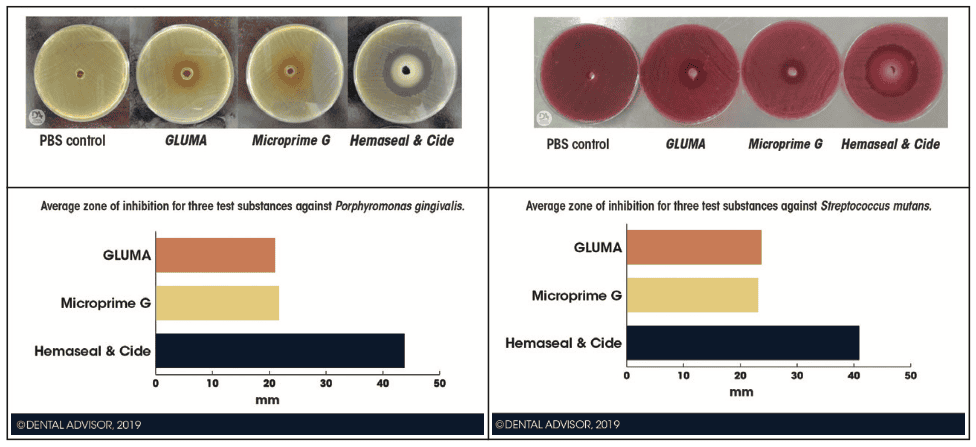
In head-to-head comparisons, Hemaseal & Cide outperformed GLUMA and Microprime G in antimicrobial efficacy—including inhibition zone studies against Streptococcus mutans and P. gingivalis (Figure 4). It achieved larger kill zones without the tissue irritation linked to glutaraldehyde.
One Solution for Many Challenges
Whether you’re addressing deep caries, eliminating post-op sensitivity, or improving long-term bond performance—Hemaseal & Cide is a reliable, all-in-one solution that wets, seals, disinfects, and preserves in any restorative workflow.
For more information, visit advantagedentalinc.com.
NOTE: Figure 3 reprinted from Puspitasari D, Herda E, Soufyan A. Int J Appl Pharm. 2017;9(Suppl 2):45-51, Fig. 4b, CC BY 4.0 (https://creativecommons.org/licenses/by/4.0/).